MM2H Platinum or PVIP

In the current Malaysian residency landscape, high-net-worth individuals (HNWIs) generally evaluate two primary long-term pathways: the MM2H Platinum tier and the Premium Visa Program (PVIP). While both offer a 20-year framework, they serve distinct financial and tax-planning profiles, distinguished primarily by their unique operational freedoms.
Work and Investment Rights
Perhaps the most significant advantage of MM2H Platinum and PVIP is the flexibility they offer within the Malaysian economy. Unlike other long-term social visit passes or lower-tier residency schemes, both the Platinum and PVIP pathways grant participants the right to:
- Work Professionally: Engage in employment without the need for a separate, employment pass.
- Direct Investment: Establish, own, and actively manage businesses in Malaysia.
- Near-Citizen Privileges: Conduct commercial activities with fewer restrictions than typical foreign residency programs in the region.
This makes these programs not just "lifestyle" visas, but active "economic" visas for those looking to integrate into Malaysia's growing market.
Financial Commitment and Capital Efficiency
The entry gate for each program targets a different style of wealth management.
- MM2H Platinum: Requires a USD 1,000,000 fixed deposit. While this is a higher upfront commitment, it eliminates the requirement for monthly offshore income proof.
- PVIP: Utilizes a lower deposit of RM 1,000,000 but mandates proof of RM 40,000 monthly offshore income. This route is often preferred by active entrepreneurs who prioritize maintaining global liquidity.
The Capital Recovery Sums
Both programs allow for a 50% withdrawal of the principal fix deposit for residential property,healthcare, and education in Malaysia.
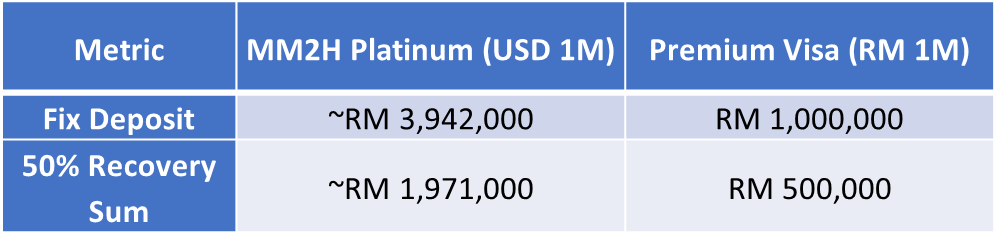
For Platinum applicants, the recovery of nearly RM 1.97M is highly strategic. As the program mandates a property purchase of at least RM 2M, this withdrawal effectively allows the participant to recycle their initial deposit into a tangible real estate asset.
Tax Residency: The Double Taxation Advantage
For applicants from high-tax nations, the tax implications are often as important as the visa itself.
- Foreign-Sourced Income (FSI): Under 2026 regulations, individual tax residents are exempt from tax on remitted foreign-sourced income (pensions, dividends, and rent) until December 31, 2036.
- Leveraging DTAs: By residing in Malaysia for 182 days or more, participants can establish tax residency and leverage Malaysia’s network of over 70 Double Taxation Agreements (DTA). This status provides a legal framework to claim relief in your home country, ensuring your offshore income is only subject to Malaysia’s favorable (and currently exempt) tax regime.
Fee Comparison: Couple and Family Scenarios
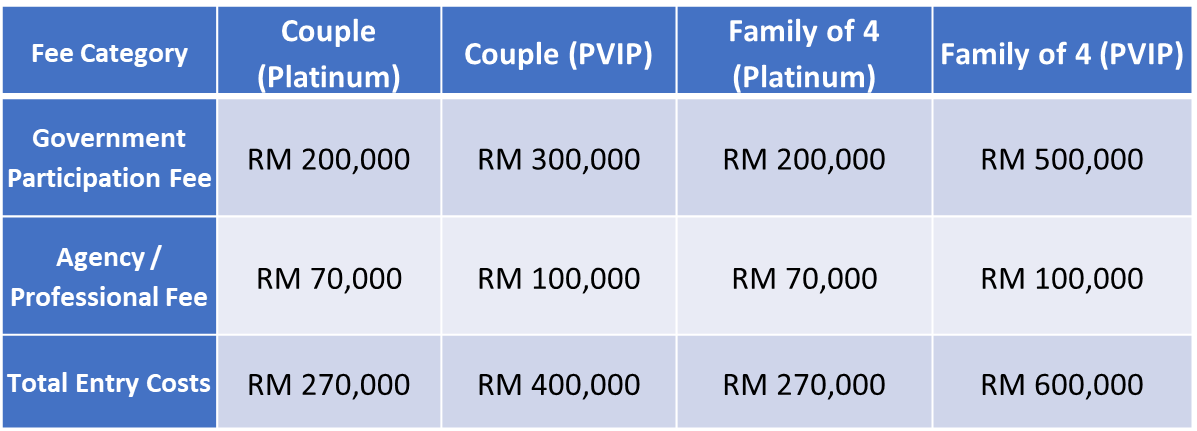
The upfront, non-recoverable costs area key consideration, particularly when relocating with dependents.
Residency Flexibility for the Over-50s
While MM2H generally requires 90 days of physical presence per year, principals aged 50 are exempt. This allows older applicants the same "zero-stay" flexibility as the PVIP, without the higher per-dependent fees or recurring income proof.
Summary of Strategic Choice
- MM2H Platinum is the better choice for families and active retirees (50+). It offers a unified fee structure, the ability to recycle capital into a home, and the right to work and invest locally.
- PVIP remains a specialized tool for younger entrepreneurs (under 50) who cannot commit to a 90-day stay and prefer to maintain capital liquidity rather than committing to Malaysian real estate.
Note: Please consult a tax consultant for final tax advice.